Commercial HVAC maintenance plans, Dallas-Fort Worth

Fewer surprises. More uptime. A maintenance plan built for your rooftop units.

Regular inspections can surface wear, drainage problems, dirty components, and operating concerns before the next peak season. The assigned contractor defines the actual visit scope for your equipment.

Contractor fit confirmed Written scope requested Terms confirmed before work
Commercial rooftop HVAC package units on a Dallas-Fort Worth building
Commercial HVACCoverage confirmed first
Confirm these before authorizing work: Contractor identityLicense where requiredInsuranceWritten scope and priceWarranty terms
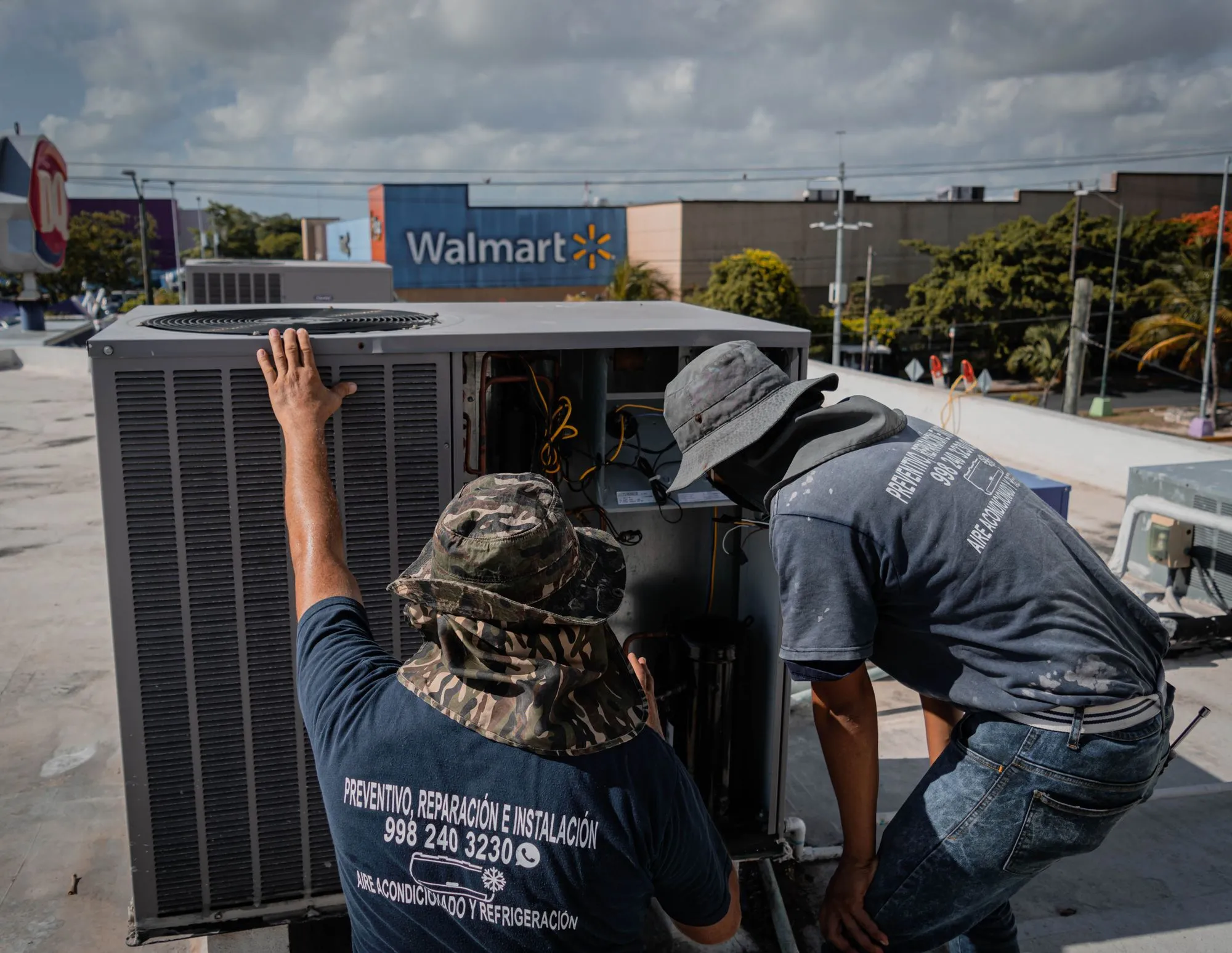
Commercial HVAC technicians servicing a rooftop package unit on a Dallas building

Plan routine work before peak-season failures

A maintenance agreement can make inspections and routine service easier to schedule and document. It does not eliminate failures or guarantee savings. Ask the contractor to separate included maintenance tasks, repair pricing, emergency terms, and exclusions so the economics are clear for your property.

What to define in the maintenance scope

Use these equipment areas to discuss the visit checklist. The contractor should state what is included, what is inspection-only, and what requires separate approval.

Rooftop HVAC maintenance scope discussion A stylized rooftop HVAC unit with eight areas to discuss when defining a maintenance scope. 1 2 3 4 5 6 7 8
  1. 1 Air filters. Confirm who supplies and replaces them, the sizes used, and the service interval.
  2. 2 Evaporator and condenser coils. Define what is inspected, what cleaning is included, and what requires separate approval.
  3. 3 Belts and motors. Ask how visible wear, tension, noise, and repair recommendations are documented.
  4. 4 Refrigerant circuit. Confirm when testing is appropriate and which refrigerant-related work needs separate authorization.
  5. 5 Electrical components. Define the visual and operational checks included in the visit.
  6. 6 Condensate drainage. Confirm the inspection and cleaning scope for drains, pans, and visible leakage concerns.
  7. 7 Economizer and dampers. Ask whether these components are present and included in the visit scope.
  8. 8 Thermostat and controls. Confirm the operating checks and any controls work that falls outside routine maintenance.

Three ways to frame the maintenance discussion

Seasonal discussion

A starting point for lower-complexity sites.

Cadence set after equipment review

  • Equipment list and access requirements
  • Inspection items appropriate to each unit
  • Filter responsibility and replacement terms
  • Cleaning tasks and exclusions
  • Repair-approval rules
  • Requested visit documentation

Best for: A site that needs a defined routine-maintenance scope.

Get my Rooftop Risk Report

Higher-use discussion

For sites that may need more frequent review.

Cadence set after equipment review

  • Everything confirmed in the base scope
  • Visit frequency tied to actual operating conditions
  • Emergency availability and response terms
  • Cleaning scope by equipment condition
  • Drainage inspection and service terms
  • Photo or written history if requested

Best for: A building with longer run hours, sensitive spaces, or more equipment.

Get my Rooftop Risk Report

Portfolio discussion

Organize equipment and service records across locations.

Site-specific schedule

  • Site-by-site equipment and access details
  • Consistent reporting requirements
  • Repair and replacement planning inputs
  • Communication and approval contacts
  • Work-order requirements confirmed with the contractor

Best for: Property managers and owners coordinating multiple buildings.

Get my Rooftop Risk Report

These are discussion frameworks, not published offers. The assigned contractor sets the actual scope, cadence, response terms, exclusions, and price after reviewing the property and equipment.

The standard we hold every contractor to

Before authorizing work, get these points confirmed directly with the assigned contractor:

  • Emergency availability and response expectations for each property.
  • Approval rules for repairs found during a maintenance visit.
  • Access and scheduling requirements for occupied buildings.
  • Visit documentation, including any requested photos or written findings.

Built for the people responsible for building comfort

Facility managers, property managers, and owners can use the Rooftop Risk Report to collect equipment and operating details before speaking with a contractor. The screening result does not replace a field inspection.

Commercial HVAC maintenance: common questions

What is a commercial HVAC preventive maintenance agreement?

A preventive maintenance agreement is a written schedule and scope for routine HVAC service. The contractor should identify the covered equipment, visit cadence, included inspection and cleaning tasks, repair-approval rules, documentation, emergency terms, exclusions, and price.

What is the $5,000 rule for HVAC?

The $5,000 rule is a simplified age-times-repair-cost shortcut sometimes used to start a repair-versus-replace discussion. It does not account for equipment condition, diagnosis, operating cost, availability, building needs, warranty, or the actual replacement scope, so it should not decide the work.

How much does commercial HVAC maintenance cost?

Cost depends on the equipment count and type, access, operating conditions, visit cadence, included tasks, documentation, emergency terms, and exclusions. Ask for a written scope and price that separates routine maintenance from repairs and replacement work.

What is the difference between commercial and residential HVAC?

Commercial HVAC may involve rooftop units, larger loads, multiple zones, ventilation equipment, different controls, and building-access requirements. Confirm that the assigned contractor has relevant experience and any credentials required for the equipment and scope.

Start with the building and equipment details.

Share the unit count, age range, service history, and current concern. The screening result helps organize the next conversation, but it is not an inspection, diagnosis, or promise of contractor availability.

Commercial HVACStart a request ›